
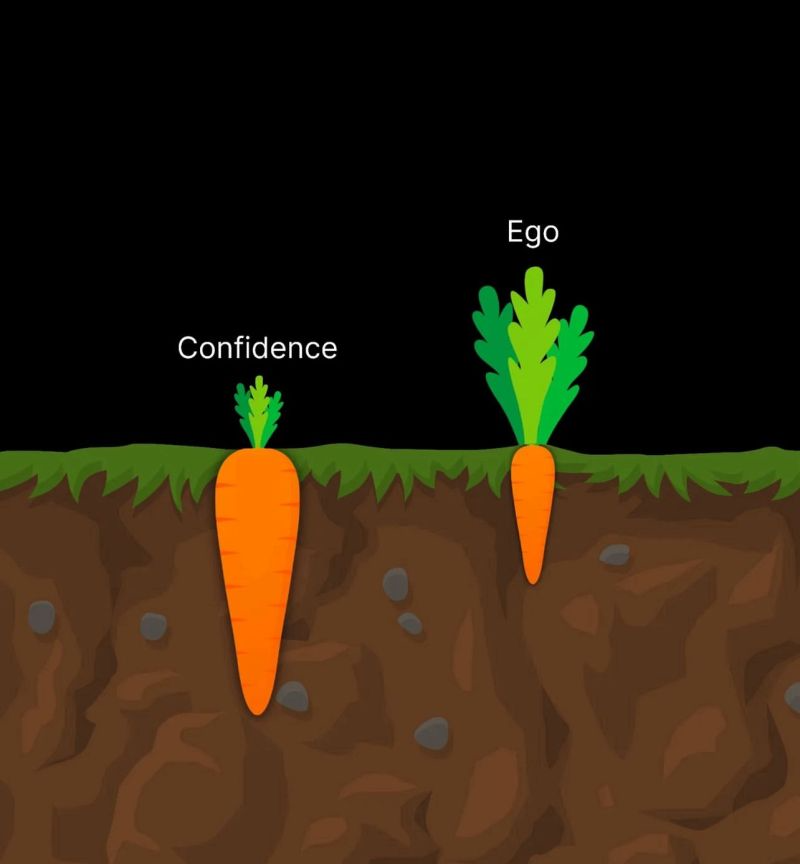
Ego and confidence get confused constantly, but they’re completely different.
Ego is your internal publicist, constantly working to convince the world you’re more important than you actually are. It feeds on external validation like a starving animal, whispering lies: “You’re always right,” “Others don’t understand your brilliance,” “You deserve special treatment.”
Confidence is quiet certainty that doesn’t need applause to exist. It knows strengths without diminishing others, admits mistakes without shame, and faces challenges without false bravado.
The workplace reveals this difference starkly. Ego-driven leaders take credit and assign blame, surrounding themselves with yes-people while making decisions to look good rather than be effective. Confident leaders share credit generously, take responsibility for failures, and prioritize what works over what impresses.
In relationships, ego demands to be right even when it destroys connection. Confidence chooses understanding over being understood, sees vulnerability as intimacy’s foundation rather than weakness.
Ego creates brittle bonds because it cannot tolerate being wrong. Confidence builds bridges by celebrating others’ success without feeling diminished, asking for help without feeling weak, and surviving failure because worth isn’t tied to perfection.
Five Ways to Build Genuine Confidence While Starving Your Ego
1. Master something difficult privately. Choose a skill that brings no social status. Learn an instrument badly, study an unused language, or practice crafts in solitude. Real confidence grows away from applause.
2. Seek feedback like a scientist seeks data. Ask trusted people for one strength and one improvement area. Listen without defending or justifying. Thank them and apply the information.
3. Celebrate others without mentioning yourself. When someone shares good news, resist relating it to your experience. Be genuinely happy for them. This breaks ego’s need to center every conversation.
4. Admit ignorance regularly. Say “I don’t know” daily when genuinely uncertain. Ask follow-up questions and let others teach you. Comfort with learning distinguishes confidence from ego’s pretense of omniscience.
5. Take on tasks where you’ll struggle initially. Join sports as the worst player, attend classes as a beginner, or tackle projects beyond current abilities. Confidence builds in the space between comfort and capability.
The paradox: the more genuine confidence you possess, the less you need to display it. Real confidence simply shows up, does the work, and makes everyone around feel more capable too.
What do you think?
Best,
Andreas von der Heydt