
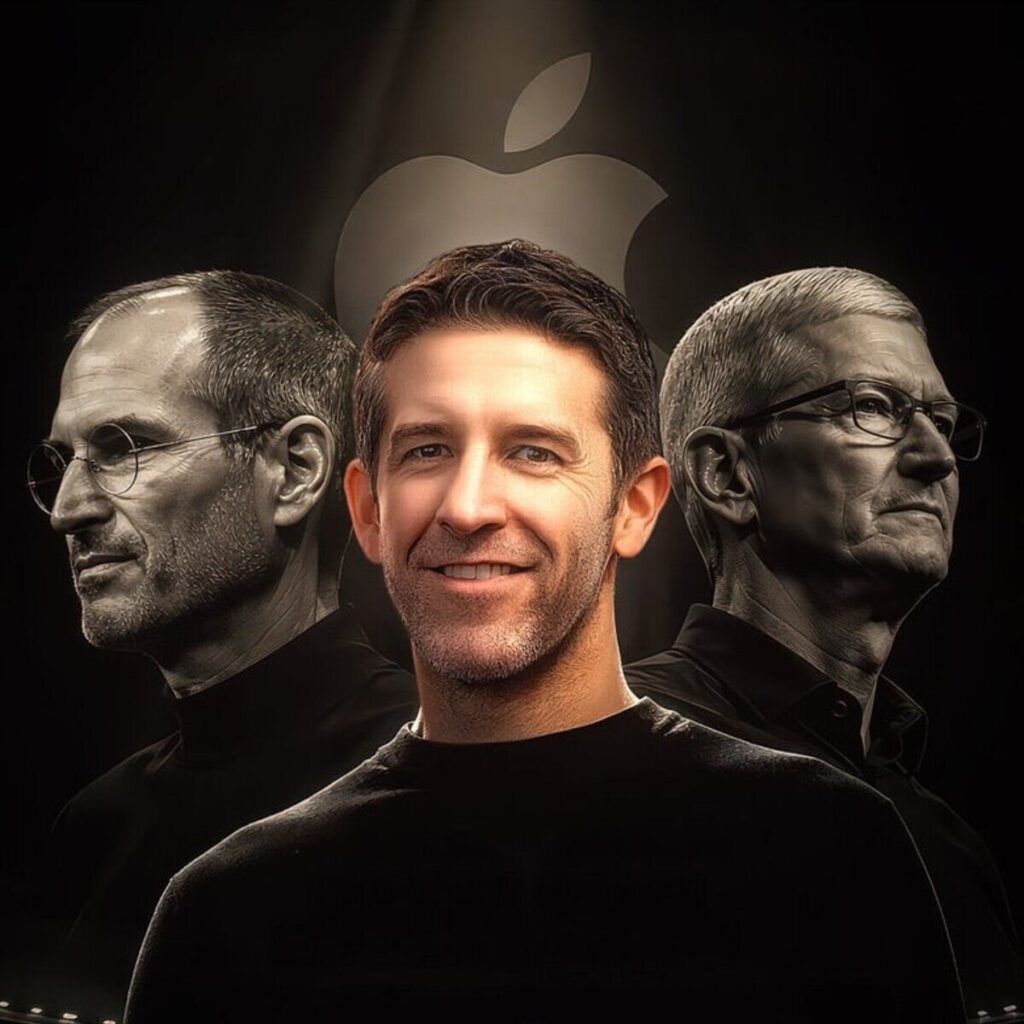
Tim Cook hands Apple’s CEO role to John Ternus on September 1 after 15 years, during which the company’s value grew from a few hundred billion to five trillion.
Many are asking whether Ternus can fill the role. I think the more relevant question is why his position is harder than Cook’s ever was.
Let’s quickly go back to 2011, when the verdict on Cook arrived before he did. Apple had lost its visionary in Steve Jobs and promoted its operations guy. Cook didn’t pay attention to his critics and instead built the supply chain into something as impressive as any product Apple ships. He added the Watch and AirPods. He grew services into tens of billions a year. He made privacy a real commercial advantage while much of the industry did the opposite. He handled Beijing and Washington with finesse nobody else in tech has shown. In 2014 he became the first Fortune 500 CEO to come out.
Cook was nothing like Jobs, so nobody waited for his Jobs moment. That difference protected him in a certain way. He was free to be good at his own things because no one expected him to be good at Steve’s. At the same time, the critics are also right. No true successor to the iPhone came under his leadership, and Apple’s AI work lags behind key competitors.
Ternus is a different leader in his own right. He’s an engineer with 25 years inside the company. He has overseen every generation of iPad, and led the teams that rebuilt the Mac around the company’s own chips, which is the biggest technical bet Apple has made since the iPhone. He’s lived in the design labs. He talks about products the way product people talk about them.
Cook inherited a company that needed to scale a platform. That was an execution problem, and execution was his gift. Ternus inherits a company that has to prove the platform still matters. For a decade Apple’s protection was the ecosystem. Phone, watch, earbuds, App Store, all connected, all easy. Now the world circles around AI and AI agents, which hasn’t been Apple’s strong suit so far.
Jobs decided by taste and trusted himself more than any market research. Cook decided by data and had numbers for almost everything he did. Ternus has neither, because nobody yet knows what an AI-native personal device even looks like, and that’s a different kind of leadership problem.
He’ll have to make billion-dollar calls he can’t justify with evidence, keep thousands of engineers committed to a direction that stays uncertain for years, and stay genuinely open to being wrong in public while the whole industry watches. And unlike Cook, he won’t have the shelter of being obviously different from the man before him. He’s a product engineer following the legendary product visionary Jobs and the operations wizard Cook.
And this is the part which is very important. Apple has now chosen a different type of leader three times, and each time the type matched the challenges ahead instead of the ones just faced. Many companies do the opposite by hiring the leader who would have been perfect for the last ten years. That’s the real difference between companies that keep winning and companies that used to.
What do you think Ternus must do in his first year as Apple’s new CEO to ensure it keeps thriving?
Best,
If you’d like to learn more about the skills we all need, even if you’re not running Apple, you might be interested in my new book HUMA. It presents the Human Power Skills that enable us to thrive in the AI era and beyond.
Image: Focus Online